Gas vs Electric Pool Heater: 5 Factors That Decide Which Is Right for You

A gas pool heater uses a burner and heat exchanger to warm your water fast, while an electric pool heat pump pulls warmth from ambient air through a refrigerant cycle and runs far cheaper over time. The right choice depends on your swim frequency, your pool size, your local climate, and how much you care about upfront cost versus long-term energy costs. This guide from Adams Pool & Spa compares natural gas heaters, propane heaters, and electric heat pumps on heat-up speed, installation cost, monthly operating cost, and BTU output, with a Southern California climate angle to help Long Beach pool owners pick the right unit.

What's the difference between a gas and electric pool heater?

A gas pool heater burns natural gas or propane to heat water through a copper heat exchanger, delivering fast, on-demand heating in any weather. An electric pool heat pump uses a refrigerant cycle to move heat from outdoor air into your pool, costing 50-70% less per month but only working well when air temperatures stay above roughly 50°F.

Gas vs electric pool heater: quick comparison

Feature Gas Pool Heater Electric Heat Pump
How it heats Burns gas in a combustion chamber Refrigerant cycle pulls heat from air
Heat-up speed Fast (hours) Slow (12-24+ hours)
Climate dependency Works in any weather Needs air above ~50°F
Upfront cost (installed) $3,500 - $5,500 $4,500 - $9,500
Monthly operating cost $200 - $500 $75 - $175
Best for Occasional, on-demand heating Regular swimming, long seasons
Lifespan 8 - 12 years 10 - 15 years
Environmental impact Burns fossil fuel Uses grid electricity
Works with spa / in-ground spa Yes (fast reheat) Yes, but slower

How a gas pool heater works

A gas pool heater pulls water from the pool, runs it through a copper heat exchanger, and heats the water with a burner fed by natural gas or propane. A circulation pump moves water through the exchanger, a control board regulates temperature, and a pressure switch makes sure water is flowing before the burner fires. Good gas heaters from Pentair MasterTemp, Raypak, Hayward, and Jandy hit efficiency ratings in the 82-84% range for current models.

Output is measured in BTU per hour. A typical residential gas heater runs 250,000 to 400,000 BTU. That raw power is what makes gas heaters so fast: they don't care what the air temperature is, they just dump heat into the water directly.

How an electric pool heat pump works

A pool heat pump doesn't create heat. It moves it. A fan pulls in outdoor air across an evaporator coil, refrigerant absorbs the warmth, a compressor concentrates that heat, and it transfers into pool water through a titanium heat exchanger. Nothing burns. Efficiency comes from leverage: for every unit of electricity the compressor uses, the pump moves 4 to 6 units of heat into the pool. That ratio is called the coefficient of performance, or COP.

The catch is that heat pumps depend on ambient air temperature. When air drops below about 50°F, the refrigerant cycle loses efficiency fast. Above that threshold, they're the cheapest way to heat a pool.

Gas pool heater pros and cons

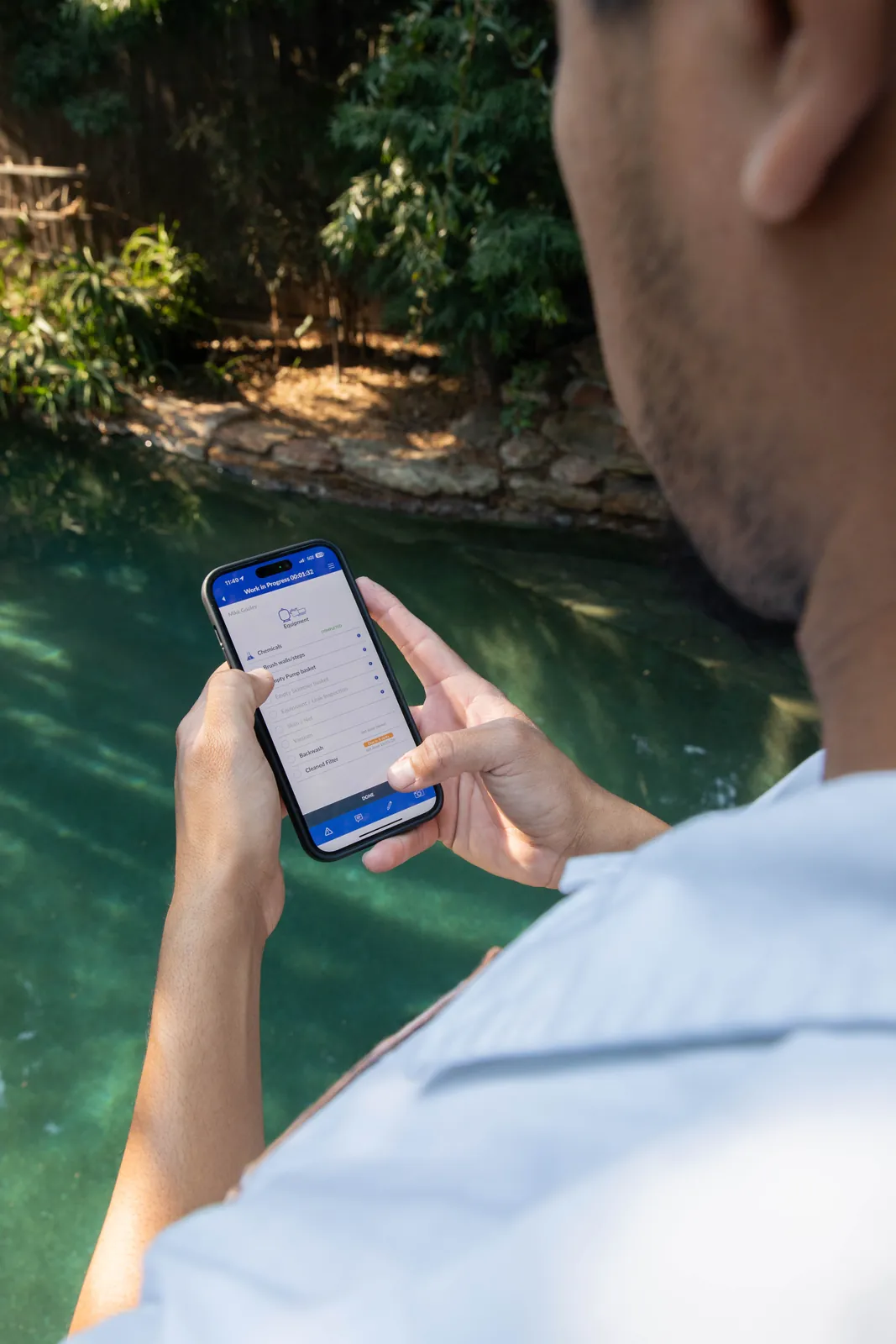
Person from behind holding a smartphone, viewing a bright green pool with trees and foliage in the background.

Pros

Fastest heat-up time of any pool heater
Works in any weather and any climate
Ideal for occasional heating and weekend use
Lower upfront cost than a heat pump
Great for spa and in-ground spa reheating
Available in very high BTU outputs for big pools
Highest monthly operating cost
Requires a natural gas line or propane tank
Shorter lifespan than a heat pump
Higher emissions
Gas prices are volatile and climbing

Electric heat pump pros and cons

Pros

50-70% cheaper per month than gas
Longer lifespan (10-15 years)
Quiet operation
Lower emissions
Holds a consistent temperature well
Ideal for mild climates like Long Beach
Higher upfront cost
Slow heat-up time (not for last-minute parties)
Loses efficiency below ~50°F outdoor air
Needs dedicated electrical service (often a 50-amp breaker)
Not ideal for fast spa reheating on its own

Gas vs electric pool heater: cost comparison

Upfront installed cost (2026, Long Beach area)

250,000 BTU natural gas heater: $3,000 - $4,500
400,000 BTU natural gas heater: $3,500 - $5,500
100,000 BTU electric heat pump: $4,500 - $6,500
140,000 BTU premium heat pump: $6,500 - $9,500
Natural gas heater: $200 - $500 per month
Propane heater: $400 - $900 per month
Electric heat pump: $75 - $175 per month

Which heats a pool faster?

Gas, by a wide margin. A 400,000 BTU gas heater can raise a 20,000-gallon pool 10 degrees in 3 to 6 hours. A 140,000 BTU heat pump doing the same job usually takes 12 to 24 hours or more, especially if it's cool outside.

This is why gas heaters win for people who heat on demand and want the pool ready by Saturday afternoon. Heat pumps win for people who keep the pool at a steady temperature all season and let it coast.

Which is cheaper to run long term?

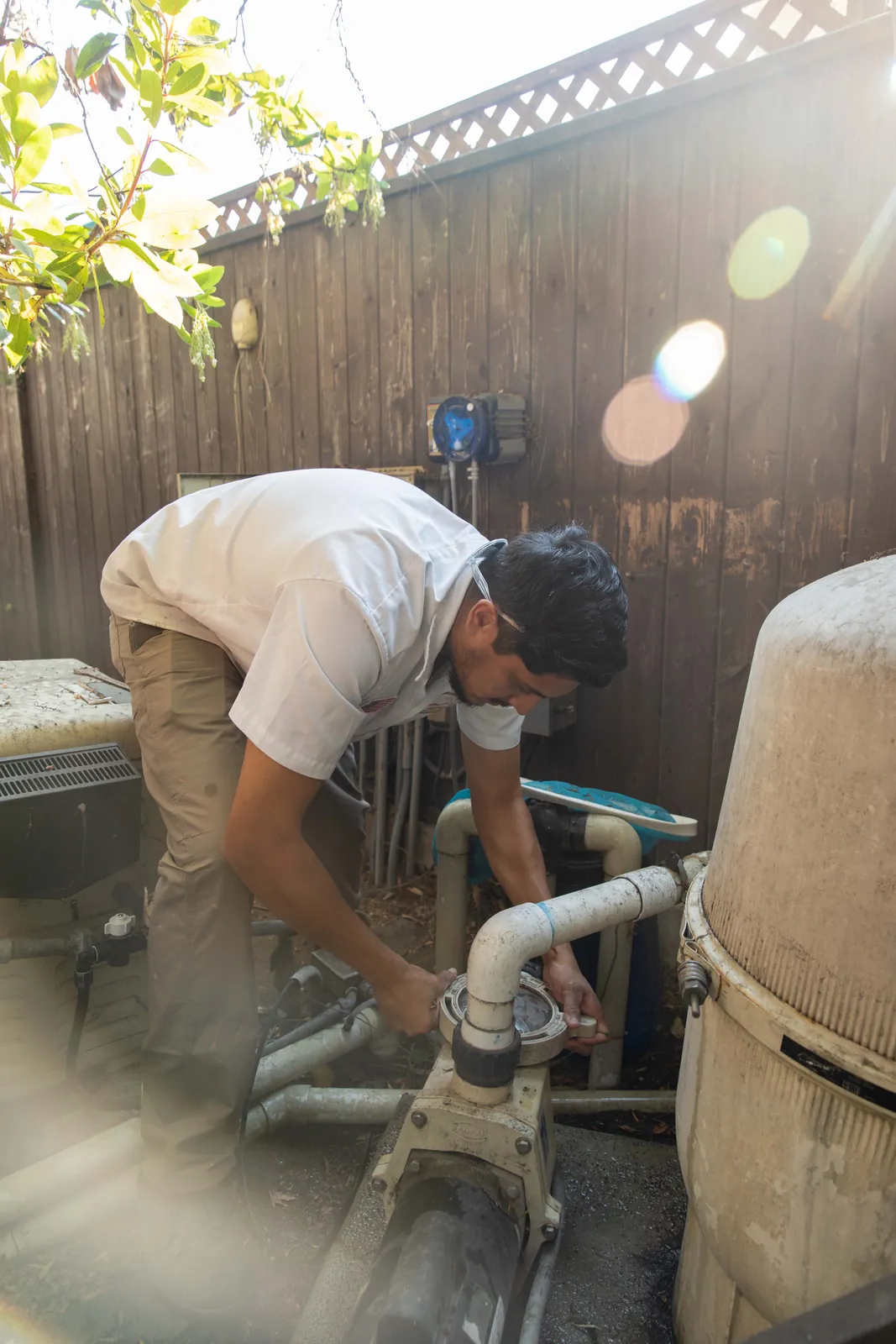
Person in white shirt and cap working on cylindrical pool system components outdoors.

Heat pumps, by a lot. The math works because a heat pump moves 4 to 6 times more heat than the electricity it uses. Gas heaters top out near 84% efficiency, so every therm of gas pays for the heat you get and a little extra lost to the flue.

The payback window on the extra upfront cost of a heat pump is usually 2 to 4 years in Southern California, assuming regular use and local electricity rates. After that, you're banking the difference every month.

For most pool owners who actually swim in their pool more than once a week, a heat pump is the long-term winner.

Gas vs heat pump in Long Beach and Southern California

Long Beach gets very few nights below 50°F. That's the exact condition a heat pump needs to stay efficient, which is why heat pumps are a natural fit for most SoCal residential pools. You can run a heat pump late into the fall and start it back up in early spring without the efficiency hit that hurts heat pumps in colder states.

Gas still has a role here. If you only heat the pool for occasional weekends, or if you have a spa or in-ground spa you want ready in an hour, gas makes sense. And for pool owners who want both fast heat-up and low operating cost, we sometimes install a gas heater and a heat pump together so each handles what it does best.

SCE rebates and California Title 24 requirements sometimes favor heat pump installs. Worth asking about when you get a quote.

Which pool heater is right for you?

Choose a gas pool heater if you:

Choose a gas pool heater if you:

  • Only heat the pool occasionally or for weekend use
  • Want the pool ready in a few hours, not overnight
  • Have a spa or built-in spa you want to reheat fast
  • Live in a climate with cold winters or want year-round heating
  • Have limited electrical service but good natural gas access
  • Prefer a lower upfront cost
Choose an electric heat pump if you:

Choose an electric heat pump if you:

  • Swim regularly and want a steady pool temperature
  • Live in Long Beach or anywhere in SoCal with mild winters
  • Care about long-term operating cost more than upfront price
  • Want the longest-lived, quietest option
  • Have room for a 50-amp electrical circuit at the pad
  • Want lower emissions and future-proof equipment

Get a pool heater installed in Long Beach

Adams Pool & Spa installs both gas pool heaters and electric pool heat pumps for residential and commercial pools across Long Beach and the surrounding LA County neighborhoods. We're Pentair Expert Installers and Jandy Certified, we size every heater against your actual pool and swim-season goals, and we'll walk through both options with real numbers so you can make the call without guesswork.

If your old heater is the reason you're reading this, our residential pool heater repair team can also diagnose what's actually broken before you commit to a replacement. For the full repair-vs-replace decision framework, read our repair vs replace pool heater guide. Broader service info lives on our residential pool repair service page.

We're based in Long Beach and serve the whole LA County coastal corridor from our service area. Read more about our team.

Call Adams Pool & Spa at (562) 439-2693 for a heater consult and quote.

FAQ

Gas vs electric pool heater FAQs

Is a gas or electric pool heater cheaper?

Gas heaters are cheaper upfront but more expensive to run. Electric heat pumps cost more to install but save 50-70% per month in operating cost. Over a 10-year lifespan, heat pumps are almost always cheaper for pool owners who swim regularly.

Do electric pool heaters work in cold weather?

Electric heat pumps lose efficiency when air temperatures drop below about 50°F. In Long Beach and most of Southern California, that's rarely an issue. In colder climates, gas is the more reliable choice.

How long does it take to heat a pool with gas vs electric?

A 400,000 BTU gas heater can raise a 20,000-gallon pool 10 degrees in 3 to 6 hours. A 140,000 BTU heat pump usually takes 12 to 24 hours for the same rise, sometimes longer in cool weather.

Can I use a heat pump for my spa or in-ground spa?

Yes, but slowly. Heat pumps aren't great at the fast reheats people expect from a spa. Many pool owners with a built-in spa pair a gas heater for the spa with a heat pump for the main pool. We install both together regularly.

Heater Comparison

Compared on this page: gas vs. electric heat pump

Long Beach climate favors heat pumps in mild months and gas heaters for fast warm-ups.

Heat pump

An electric pool heater that moves heat from the air into pool water. Lower operating cost than gas in mild Long Beach winters; longer warm-up time than gas.

Wikipedia ↗ · Wikidata ↗

Long Beach

The Pacific-coastal Los Angeles County city where Adams Pool & Spa is based. Long Beach pools share salt-air corrosion patterns, hard-water scaling, and a year-round swim season that drives weekly chemistry cadence.

Wikipedia ↗ · Wikidata ↗