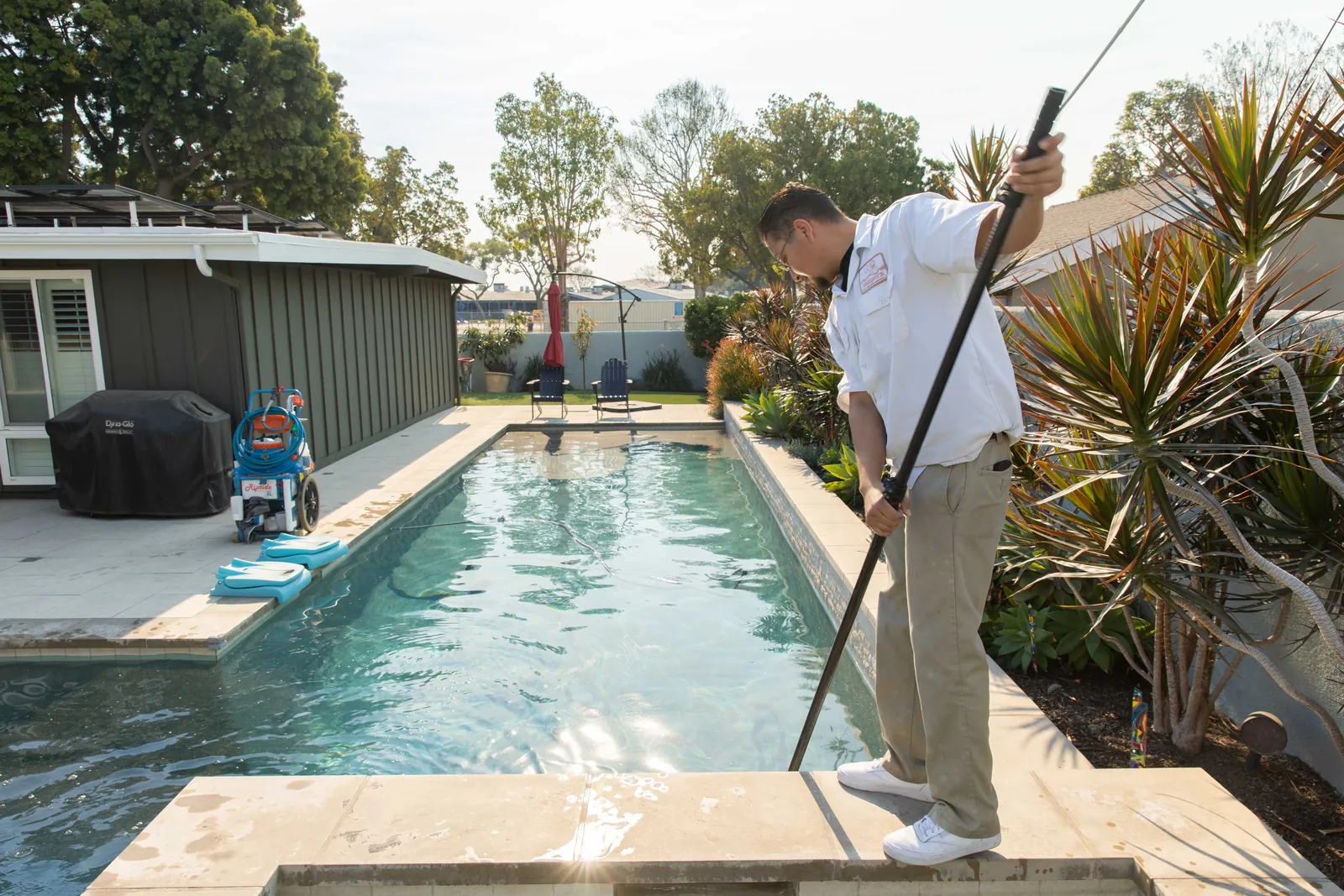
Variable Speed vs Single Speed Pool Pumps: 5 Differences That Matter
A single speed pool pump runs flat out at 3,450 RPM every hour it's on, while a variable speed pool pump throttles the motor down to move the same water using a fraction of the electricity. The difference shows up on your electric bill, on the noise level at the equipment pad, and in the lifespan of the pump motor itself. This guide from Adam's Pool and Spa Service explains the pump affinity law, the DOE Dedicated-Purpose Pool Pump rule, the payback math, and which variable speed pool pumps from Pentair, Hayward, and Jandy are actually worth installing in 2026.
Is a variable speed pool pump really worth the upgrade?
Yes, a variable speed pool pump is worth it for almost every pool. They use 50-80% less electricity than single speed pumps and typically pay for themselves in 1 to 2 years through lower electric bills. Since 2021, federal DOE rules require most new residential pool pumps to be variable speed anyway.
Single speed vs variable speed pool pump: quick comparison
| Feature | Single Speed Pump | Variable Speed Pump |
|---|---|---|
| Motor type | Induction motor | Permanent magnet motor |
| Speed | Fixed 3,450 RPM | Adjustable 600 - 3,450 RPM |
| Energy use | 2,000 - 3,500 watts | 150 - 1,800 watts depending on speed |
| Annual electric cost | $800 - $1,600 | $150 - $400 |
| Noise level | Loud | Quiet at low RPM |
| Lifespan | 5 - 8 years | 8 - 12 years |
| Programmable schedules | No | Yes |
| DOE compliant for new installs | No (most sizes) | Yes |
| Upfront cost (installed) | $500 - $900 | $900 - $2,200 |
What's the difference between a single speed and variable speed pool pump?
A single speed pool pump has an induction motor that runs at one speed: full throttle, 3,450 RPM, every minute the pump is powered on. It doesn't matter if you're running the main filter cycle, vacuuming, or just circulating water slowly overnight. The pump pulls full wattage all the time.
A variable speed pool pump uses a permanent magnet motor with a built-in variable frequency drive. You can dial the RPM anywhere from about 600 up to 3,450, usually through an on-board touchscreen and programmable schedule. The pump can run slowly for daily filtration, ramp up for a cleaner cycle, and drop back down at night, all automatically.
That RPM flexibility is where the savings come from.
How the pump affinity law saves you money
The pump affinity law is the physics behind the savings. In plain English: cutting a pump's speed in half doesn't cut energy use in half. It cuts energy use to roughly one-eighth.
That's because the power a pump consumes scales with the cube of its speed. Drop the RPM from 3,450 down to 1,725 and you're using about 12% of the electricity. You're still moving water, just more slowly, and for typical daily filtration that's all your pool actually needs.
The tradeoff is you run the pump longer at lower speeds to hit the same turnover rate. Even with longer runtimes, the math still lands on 50 to 80% less total energy use over a day.
How much can a variable speed pump save on your electric bill?
Real numbers for a typical 20,000-gallon residential pool:
Single speed pump
Why variable speed pumps are now federal law
The U.S. Department of Energy's Dedicated-Purpose Pool Pump Rule took effect in July 2021. It requires most new residential pool pumps above 0.711 total horsepower to meet a weighted energy factor that, in practice, only variable speed pumps can hit. Single speed pumps in those sizes can't legally be manufactured or installed in residential applications anymore.
That means if you're replacing a dead single speed pump today on a typical residential pool, your replacement is going to be a variable speed pump. You don't have to debate the upgrade because the law already made the call.
California layers Title 20 on top of the federal rule, which has required variable or two-speed operation on larger residential pool pumps for years. Long Beach pool owners have effectively been in a variable-speed market longer than the rest of the country.
Variable speed vs single speed pool pump: cost comparison
Upfront cost (installed, 2026)
Payback period: how fast does a variable speed pump pay for itself?
For most residential pools in Long Beach, a variable speed pool pump pays for itself in 1 to 2 years. Heavy use, higher electric rates, and longer daily runtimes shorten that window. Occasional use on a small pool can stretch it to 3 years.
After the payback period, every month the savings are pure cash back in your pocket. Over the life of the pump, the savings almost always dwarf the upfront premium several times over.
SCE has historically offered rebates on qualifying variable speed pool pumps. Worth asking about when you get a quote.
Are variable speed pumps quieter and longer-lasting?
Both, yes. A single speed pump running at 3,450 RPM is loud. You can hear it from inside the house. A variable speed pump running at 1,200 RPM is about as loud as a fridge. Neighbors and backyard conversations both benefit.
Lifespan is the other underrated advantage. Single speed motors run hot because they're always at full throttle. Heat kills bearings and seals. Variable speed motors run cooler at low RPM most of the day, which is why they typically last 8 to 12 years versus 5 to 8 for single speed pumps. Add in built-in thermal protection and smarter controls and you're looking at meaningfully less downtime.
Best variable speed pool pumps: Pentair, Hayward, Jandy
Three brands cover most of the residential market:
When to upgrade your single speed pump
Three common upgrade triggers:
At the moment of replacement, federal law and energy math both point to variable speed. No reason to fight it.
If you've watched your power bill rise and the pool runs several hours a day, the pump is often the biggest lever you have.
Variable speed pumps play well with pool automation, smart schedules, and upgraded filtration. Good time to bundle the upgrade.
Variable speed pump installation in Long Beach
Adam's Pool and Spa Service installs, programs, and services variable speed pool pumps across Long Beach and the surrounding LA County neighborhoods. We size the pump against your pool gallons, plumbing, and turnover rate. We set up the schedule so you get full filtration without wasting energy. And we're Pentair Expert Installers and Jandy Certified, so the install is done by technicians who've put hundreds of these pumps on real equipment pads.
Our residential pool pump repair team can diagnose your existing pump and quote both repair and variable speed upgrade options side by side. Full service info lives on our residential pool repair service page.
We're based in Long Beach and serve every neighborhood listed on our service area. Read more about our team.
Call Adam's Pool and Spa Service at (562) 439-2693 for a pump assessment or upgrade quote.
Variable speed vs single speed pool pump FAQs
Is a variable speed pool pump worth it for a small pool?
Usually yes, though the payback takes a little longer. Smaller pools run the pump fewer hours, so absolute savings are smaller. But the DOE rule means you'll end up with a variable speed pump anyway whenever the current one needs replacement.
How long does a variable speed pool pump last?
Most variable speed pool pumps last 8 to 12 years with proper water chemistry and regular maintenance. That's meaningfully longer than the 5 to 8 years a typical single speed pump survives at full RPM.
Can I replace my single speed pump with a variable speed pump myself?
You can, but we don't recommend it. Variable speed pool pumps need proper electrical wiring, programming, and plumbing alignment. DIY installs often end up running on the wrong schedule and leaving savings on the table. A professional install pays for itself in energy savings alone.
Do variable speed pool pumps qualify for rebates?
Sometimes. SCE has historically offered rebates on qualifying variable speed pool pumps installed in California. Availability changes year to year, so check with your installer when you get a quote.
Compared on this page: variable-speed vs. single-speed
California Title 24 mandates variable-speed on new builds. Here's why, plus the chemistry detail it changes.
- Variable-speed pump
-
A pool pump with a permanent-magnet motor that runs at adjustable speeds. Cuts pool electrical bills by 60 to 80 percent versus single-speed pumps and is required by California Title 24 on new builds.
- Cyanuric acid
-
A chlorine stabilizer that protects free chlorine from UV degradation in outdoor pools. Held between 30 and 50 ppm in residential Long Beach pools; over 80 ppm chlorine becomes ineffective.